The next generation of cold storage facilities and packing centers can no longer rely solely on storing products. To compete effectively, it is essential to equip these centers with intelligent sorting systems so that the final product is delivered with the highest quality, minimal waste, and maximum added value.
Using these machines not only elevates the professional standard of the facility but also distinguishes it among competitors and paves the way for stable entry into high-demand and export markets.
At this step, the apple tree is carefully washed.
At this step, the apples are well disinfected and detoxified.
At this step, tree apples are completely dried.
At this step, waxing and polishing are done to prevent the apples from rotting.
At this step, apples are sorted based on color, size and appearance.
Apples are sorted by size and appearance and are ready for packaging.
Higher-quality and more uniform apples fetch better prices in the market.
Sorting increases work speed and reduces the need for human labor and errors.
Damaged or crushed apples are separated, preventing spoilage from spreading to other apples.
A product that is uniform in size and color has a higher chance of being exported.
The fruit washing tub uses a uniform water flow and buoyancy to transfer and wash delicate fruits without causing impact, making it the safest and most effective method to preserve product health.
The inspection table is located between washing and brushing, where operators remove damaged or inferior fruits from the line, ensuring only healthy products proceed to the next stages. Its stainless steel body, safe design with non-slip flooring, and proper lighting guarantee quick and secure inspection.
During the brushing stage, apples are cleaned and polished with roller brushes, and if necessary, approved pesticides or fungicides are applied in a controlled manner. The fruits then enter a drying system with adjustable heating elements to ensure their surfaces dry evenly and safely.
The aligner section arranges apples in orderly rows to prevent collisions or piling. By adjusting the belt’s length and speed, the flow of fruit becomes smoother, enhancing sorting efficiency.
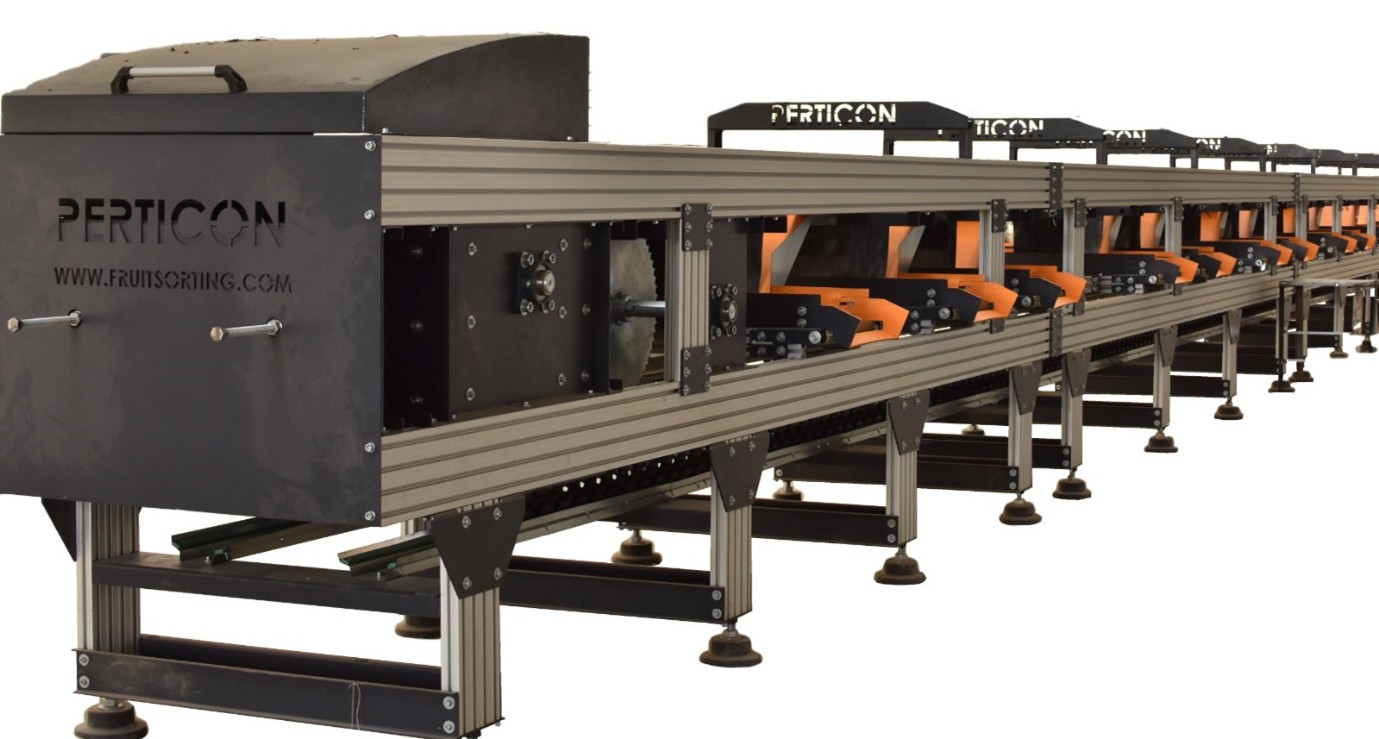
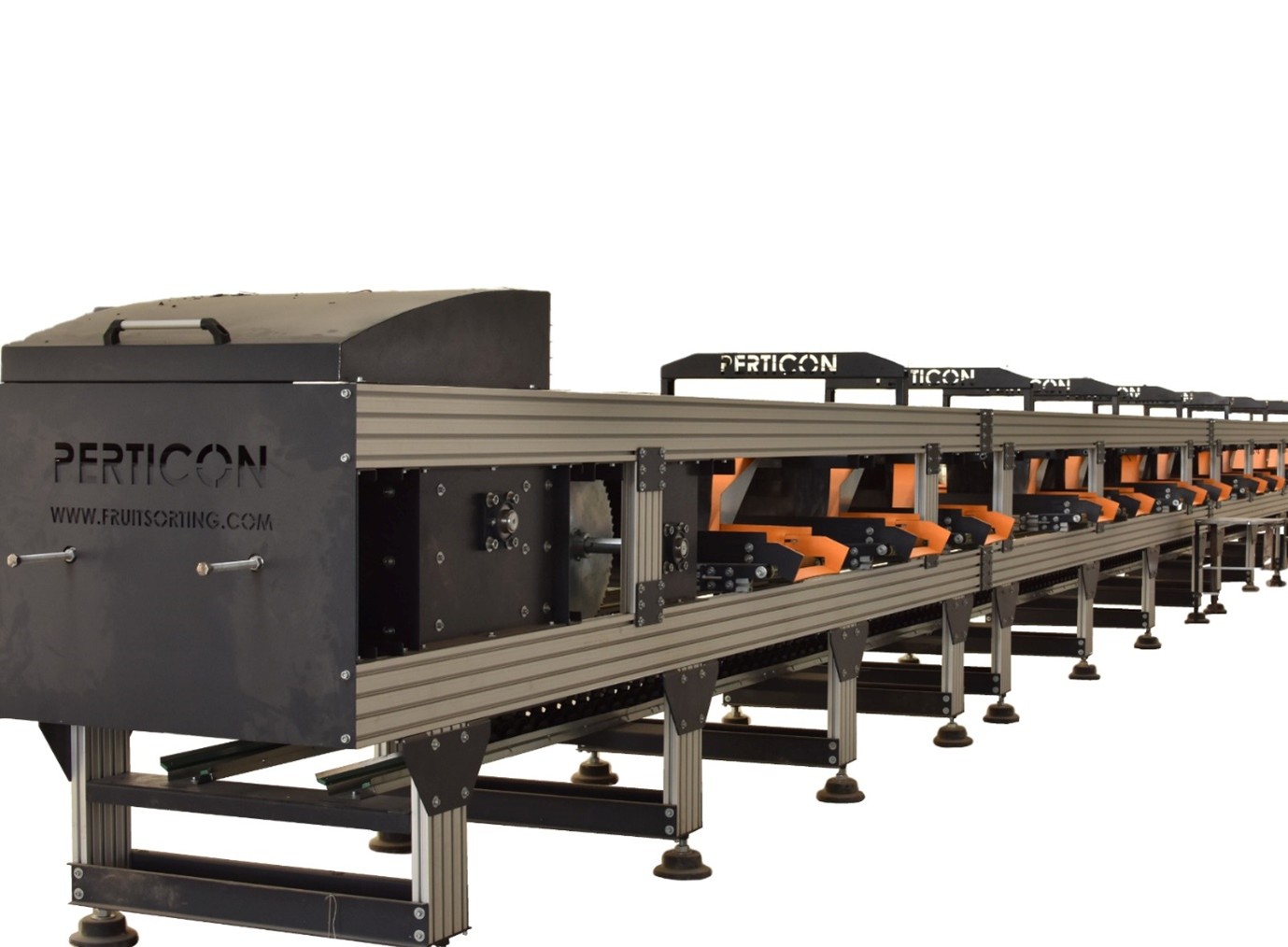
The fruit sorting machine is an advanced industrial machine that uses multiple lines and special cups to categorize fruits based on size, weight, and quality.
Fruit sorting machines, with low noise, optimized power consumption, adjustable sorting grades, and easy operation, make it simple to categorize and organize products.
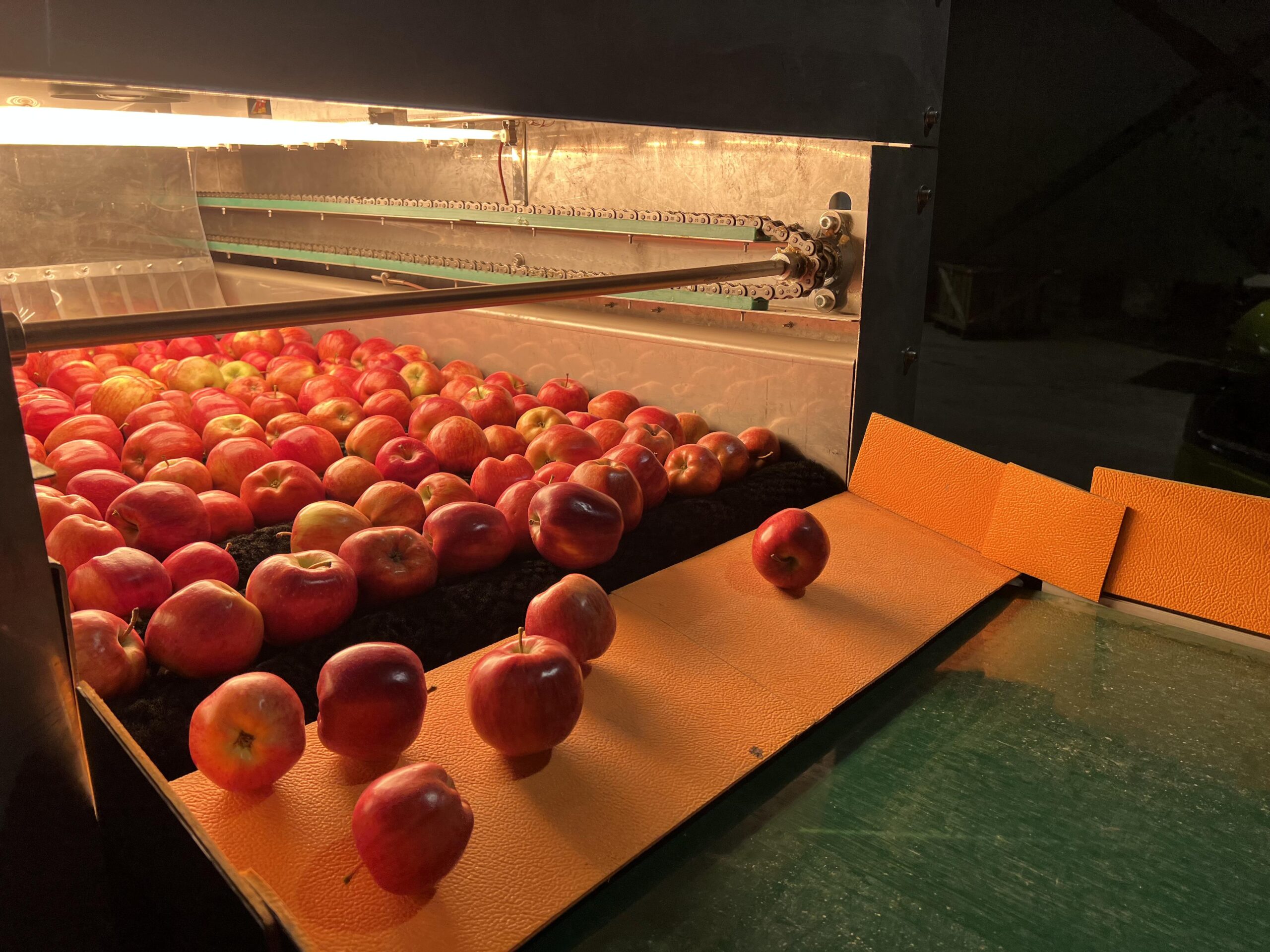
Image-processing cameras with 360-degree coverage and the ability to capture 120 frames per second.
The sorting machine also separates and categorizes apples based on color.
Apples can be separated by weight using a sorting machine.
Using the artificial intelligence system and deep learning algorithms, damaged and unripe apples can be separated.
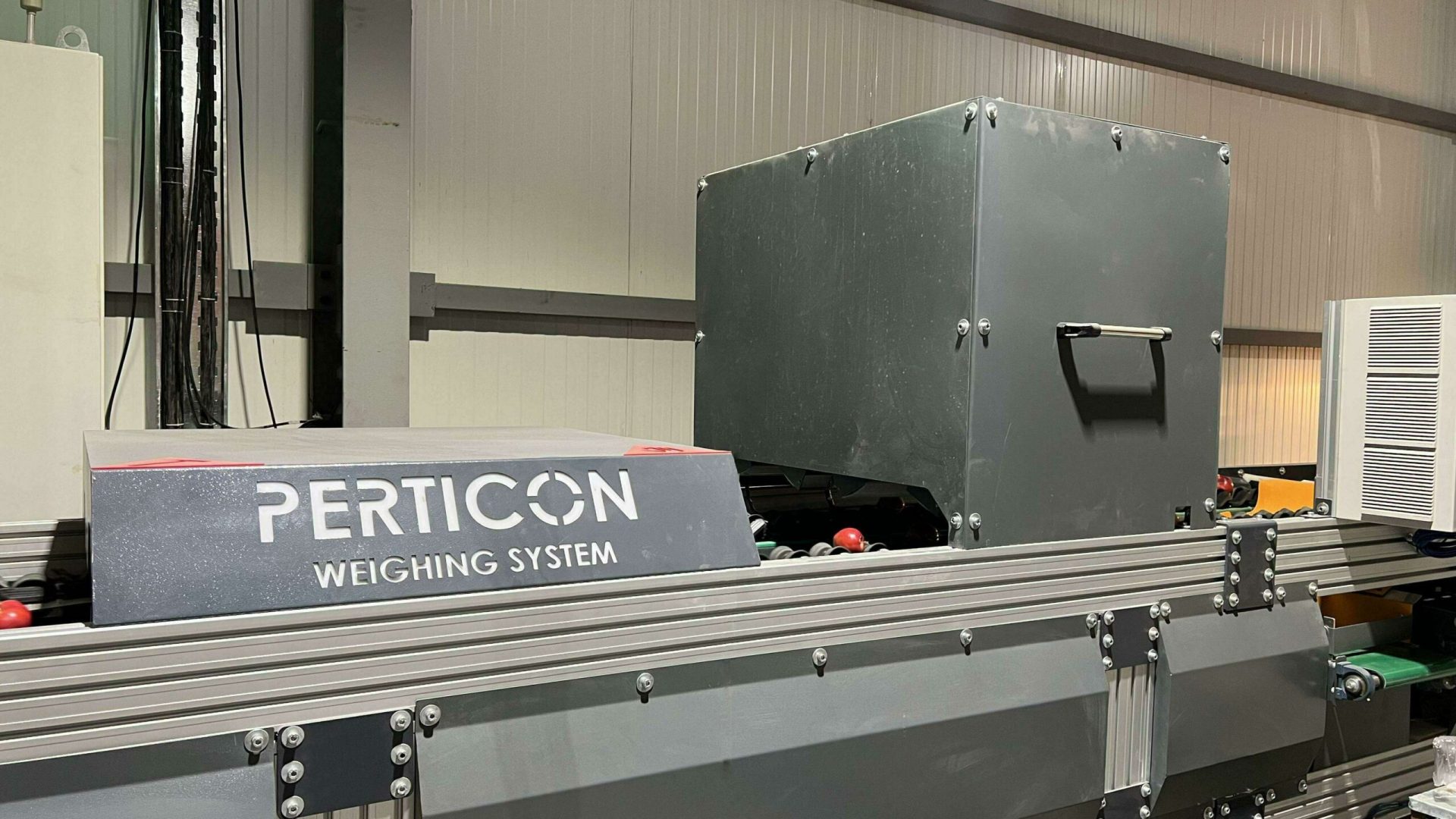
The weighing system of the sorting machine measures the weight of fruits with precision load cells to less than 2 grams and removes noise and vibration effects through digital processing. The net weight of each fruit is calculated by subtracting the cup’s weight, and the system compensates for speed and temperature effects, enabling accurate weight recording of up to 12 cups per second.
The sorting machine’s image processing system, with Full HD cameras above the cups, captures 360-degree photos and 3D models of each fruit. Data is processed in real-time to detect visual defects such as spots, rot, cracks, and color changes. The system calculates the diameter, size, and visual characteristics of the fruit and analyzes color spectra for precise grading. Calibratable software allows full machine control and automatic detection of defective fruits. This technology provides higher speed, accuracy, and efficiency than human labor while reducing waste.
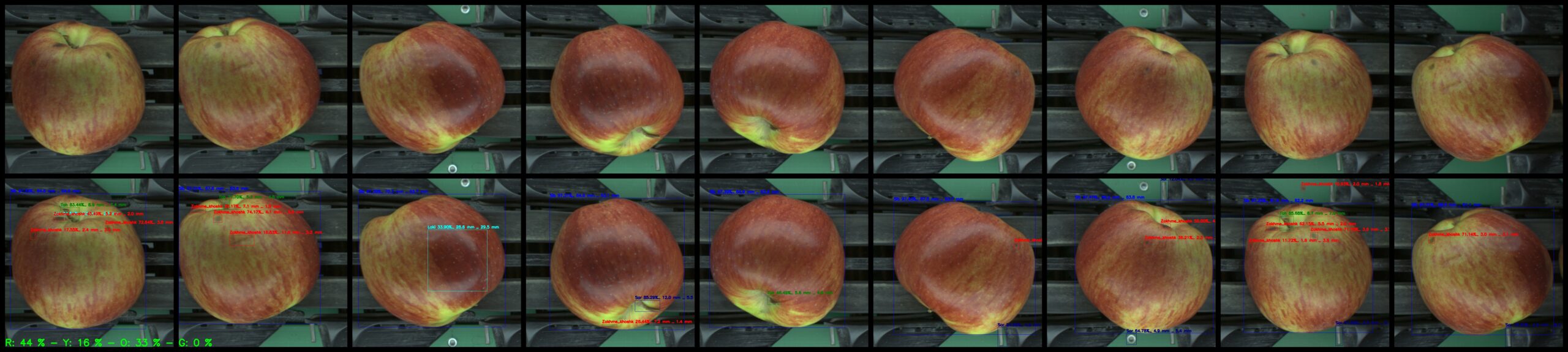
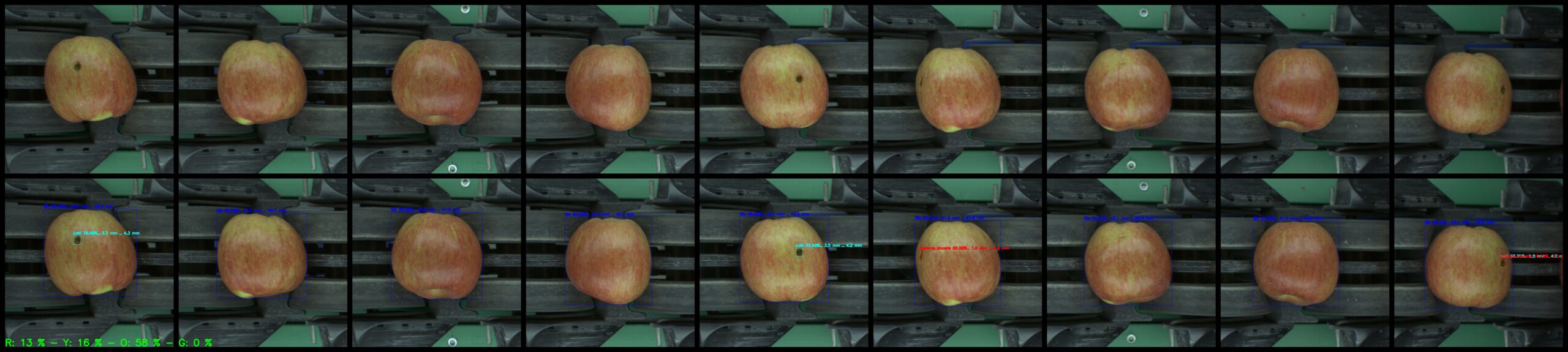
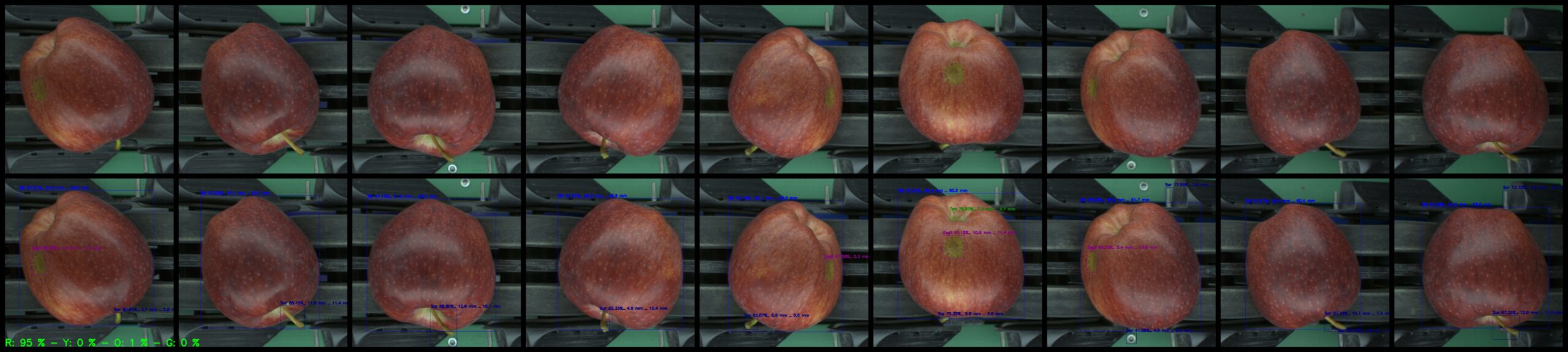
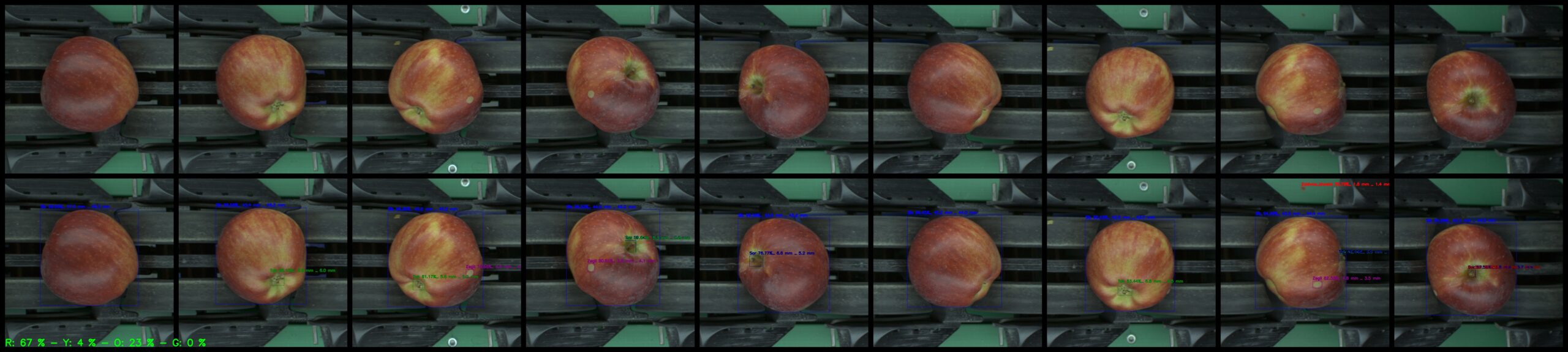
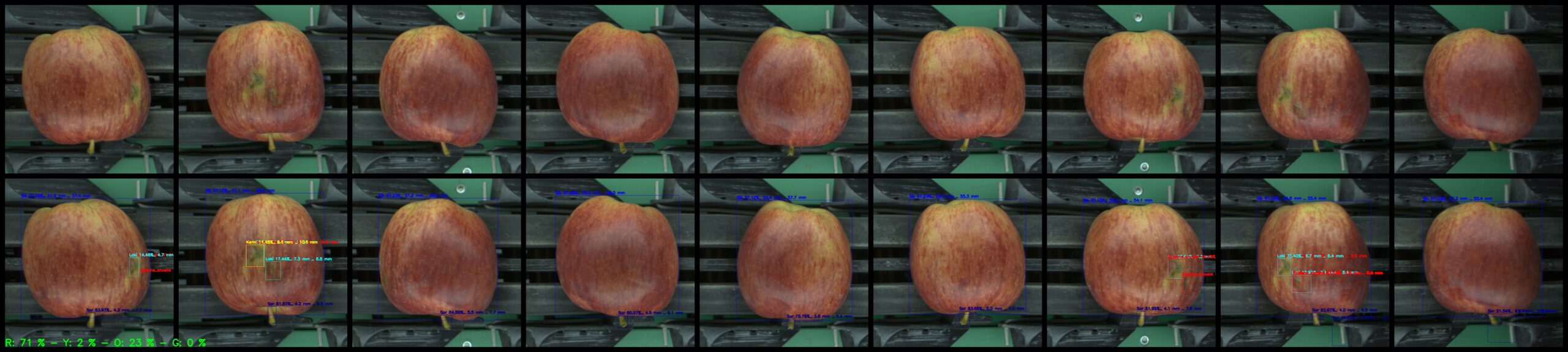
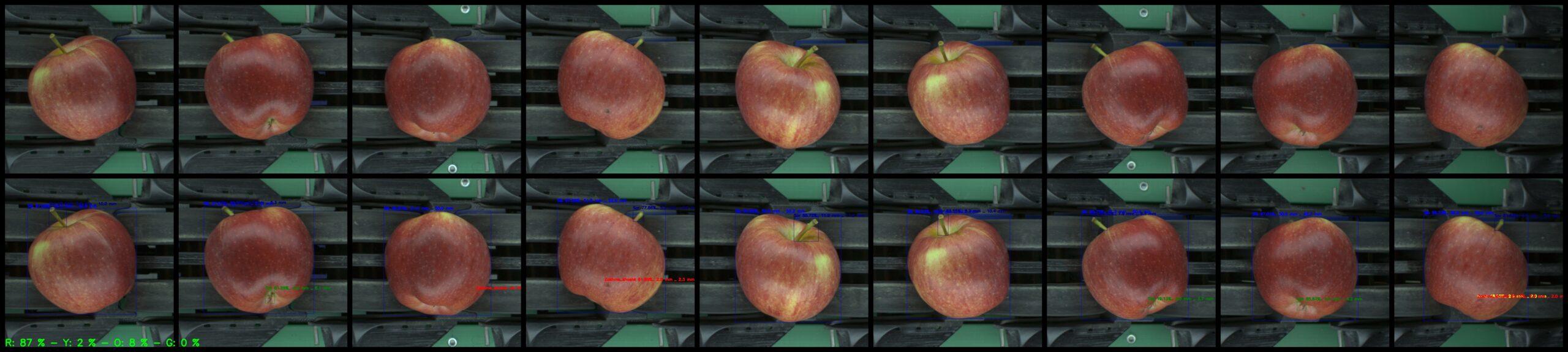
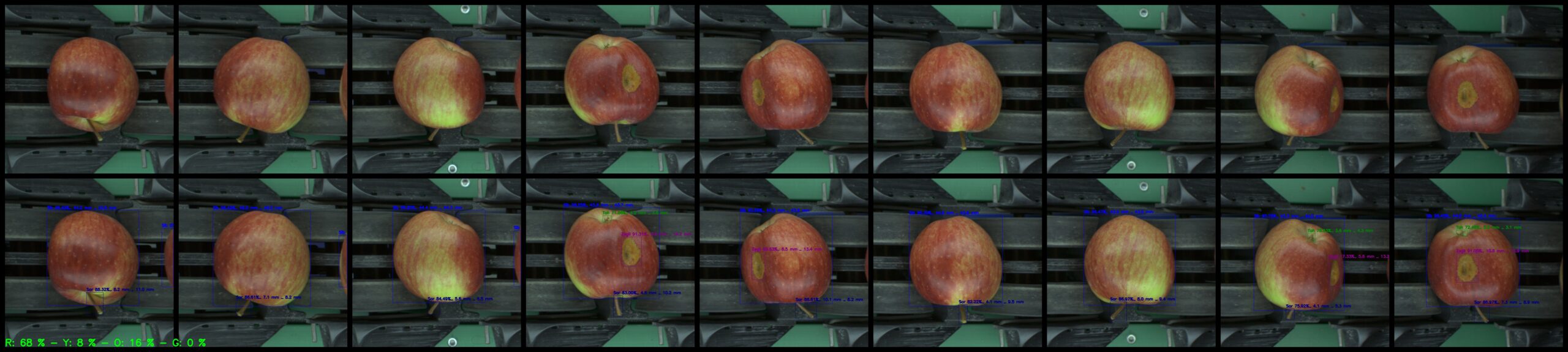
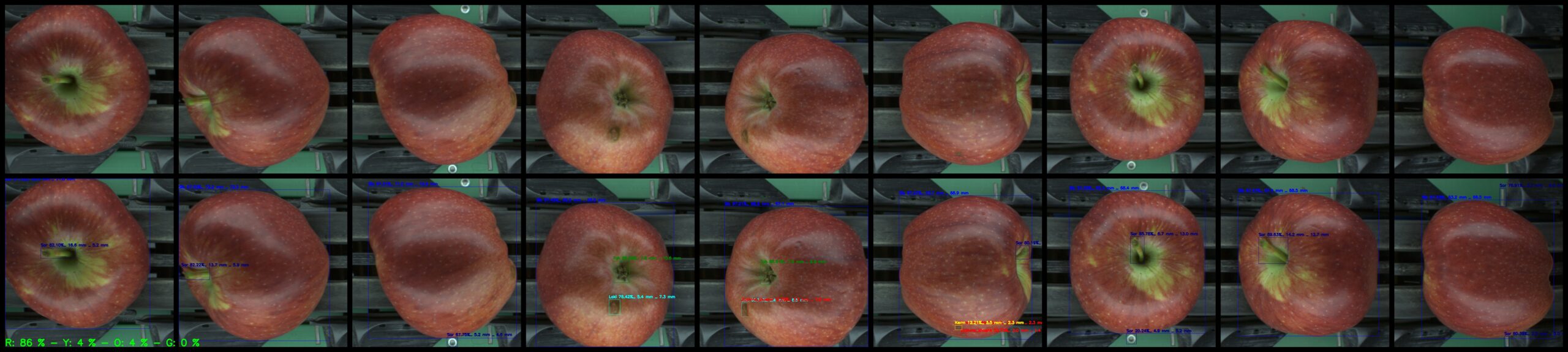
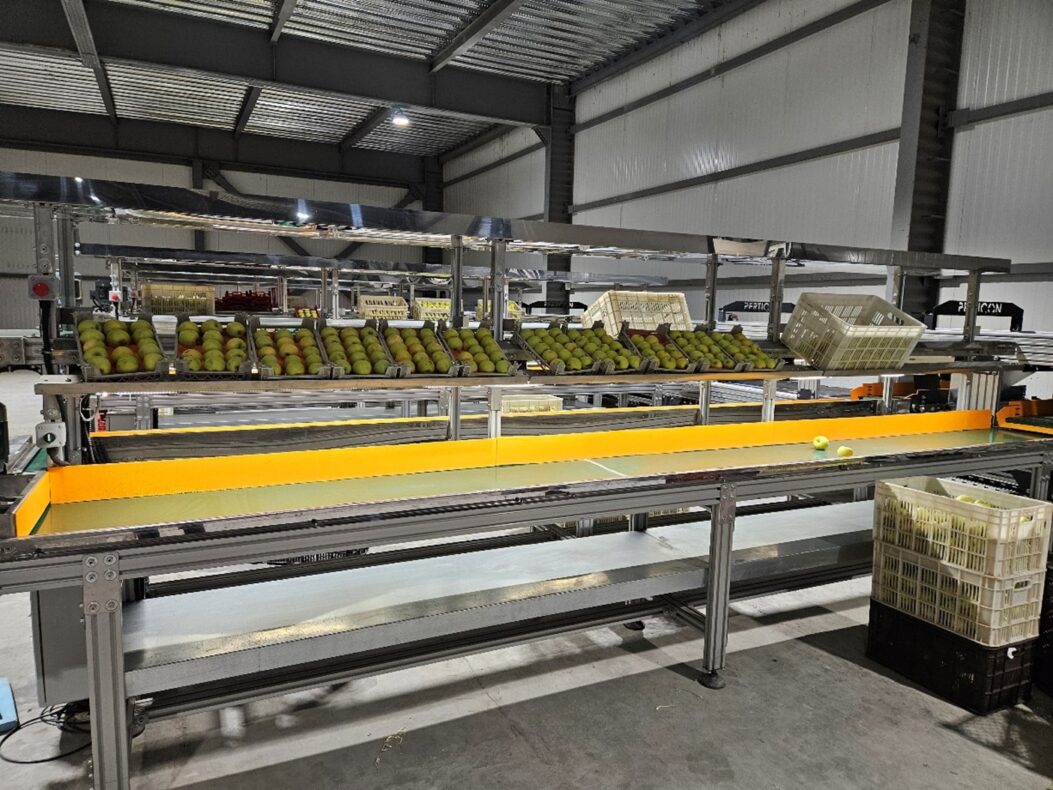
The presence of multiple independent outputs allows fruits to be sorted according to weight, color, and defect type, and then directed to the designated output as desired.

Complete control of the sorting system is provided via Prtikan’s proprietary software installed on a touch panel. Key features of this system include:
• Precise control of equipment rotation and inverters to manage the speed of conveyors and cups
• Full adjustment and calibration of equipment such as load cells and cameras, including setting detection sensitivity and accuracy through the software
• Detailed and comprehensive reporting on weight, size, color, defect percentage, number of products processed, output of each category, and daily or shift performance
• Remote monitoring and control capabilities via the Internet
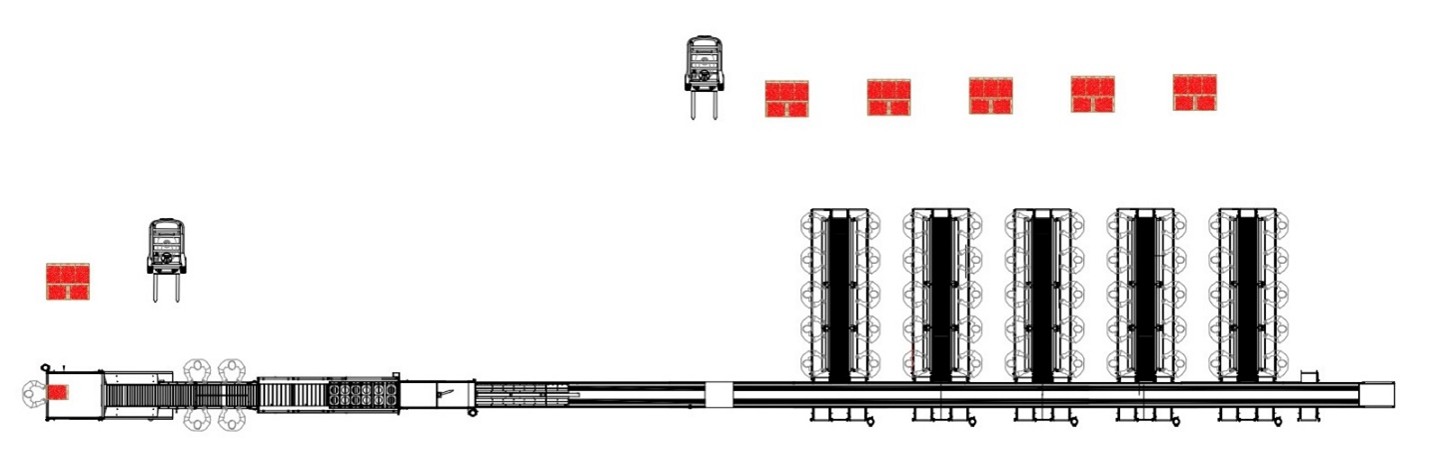
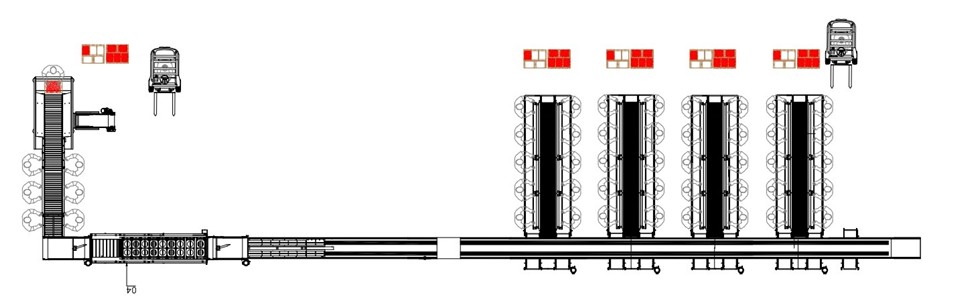
| Item | Specification |
|---|---|
| Number of Lines | 1 to 6 lines |
| Capacity | 2.5 tons per hour per line |
| Speed | 4 to 12 cups per second |
| Accuracy | 1 gram |
| Detection | Based on color, shape, and defects |
| Material | 304 Stainless Steel |